


News
CS2 Rarity Tiers Explained: From Consumer Grade to Covert

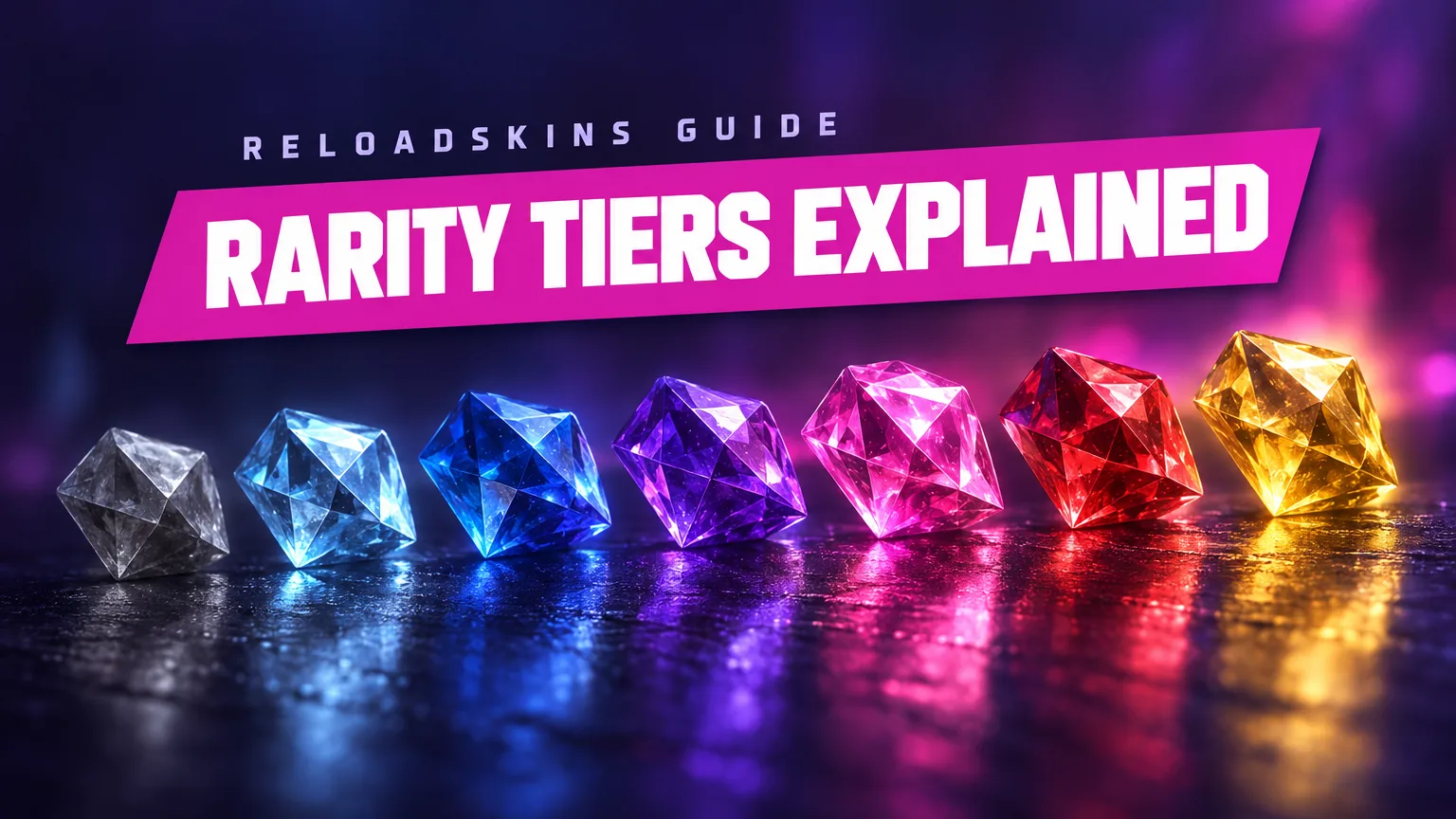
Every CS2 skin belongs to a rarity tier, and each tier has its own colour. Once you know the colours, you can tell at a glance roughly how scarce an item is. In this guide you will learn the full list of tiers from lowest to highest, what the special Contraband and gold categories mean, and why rarity is only one part of choosing a skin you will love.
What rarity means in CS2
Rarity describes how scarce an item is. Items in the lower tiers are more common, while items in the higher tiers are scarcer. That is all rarity measures: it is a scale of scarcity, not a score for how good a skin looks.
Each tier is shown with its own colour, so the colour coding works as a quick visual shorthand for where an item sits on the scale. Rarity belongs to the skin itself, which means every copy of the same skin shares the same tier, even when those copies differ in wear or pattern.
The rarity tiers from lowest to highest
Here are the six standard tiers in order, from the most common to the scarcest:
| Tier | Colour | Where it sits |
|---|---|---|
| Consumer Grade | White | The most common tier |
| Industrial Grade | Light blue | A step up from Consumer Grade |
| Mil-Spec | Blue | The middle of the scale |
| Restricted | Purple | Scarcer than Mil-Spec |
| Classified | Pink | Scarcer again |
| Covert | Red | The scarcest standard tier |
The names give you a feel for the progression. Consumer Grade and Industrial Grade sit at the everyday end of the scale. Mil-Spec, short for military specification, is the middle ground. Restricted, Classified and Covert then climb towards the scarcest standard weapon skins.
Being in a lower tier does not make a skin dull. Plenty of Consumer Grade, Industrial Grade and Mil-Spec skins have clean, attractive designs, and they can be a great way to give lots of weapons in your loadout a fresh look.
Contraband and gold items
Beyond the six standard tiers, there are two special categories worth knowing about:
- Contraband (orange) is a special tier that has been discontinued. It sits apart from the regular scale and is best thought of as a category of its own rather than the next step after Covert.
- Knives and gloves (gold) are shown as rare special items in their own colour. Gold marks them out from regular weapon skins and signals that they belong in a class of their own.
Within knives and gloves, the familiar ideas still apply. Each one has a finish, a float value that sets its exterior and a pattern index that can affect how it looks. The gold colour tells you what kind of item it is, but it does not tell you anything about the condition of a particular copy.
Reading rarity at a glance
The colour system is useful because it is consistent. Once you have learned it, you can scan a loadout or a list of items and get a rough sense of each item’s tier without reading every name.
A few pointers make the colours easier to remember:
- White, light blue and blue sit at the more common end of the scale.
- Purple, pink and red mark the scarcer end of the standard tiers.
- Orange and gold sit outside the regular scale as special categories.
If you remember that the colours move from white and blues towards purple, pink and red as items get scarcer, you will rarely need to look the tiers up again.
Why rarity is not the whole story
It is tempting to assume that a higher tier always means a better-looking skin, but rarity only tells you how scarce an item is. It says nothing about whether you will like the design, and it does not describe the condition of a particular copy.
Several other things shape how a skin looks, and many of them can also affect how it is priced:
- Wear. The float value sets the exterior, from Factory New to Battle-Scarred. Our guide to skin wear explains the ranges.
- Pattern. On some finishes, the pattern index changes how the design is placed on the weapon.
- StatTrak or Souvenir. These special versions add a kill counter or a fixed set of tournament stickers.
- Personal taste. A Mil-Spec skin in colours you love can do more for your loadout than a Covert one you feel lukewarm about.
Using rarity when you shop
Rarity is most useful as a starting point rather than a final answer. Here is how to use it well:
- Decide what you want. If you are after a standout centrepiece, you might look at higher tiers or at our knives and gloves. If you want to refresh lots of weapons, the lower and middle tiers are well worth exploring.
- Mix tiers freely. A loadout does not need to be all one tier. Matching colours and styles often matters more than matching rarity.
- Check the exact item. Every copy of a skin shares its tier, but wear and pattern differ from copy to copy, so look at screenshots of the specific item.
- Buy what you enjoy. Pick skins because you like how they look, not just because of the colour of their tier.
Key takeaways
- Rarity describes how scarce an item is, and each tier has its own colour.
- From lowest to highest, the standard tiers are Consumer Grade (white), Industrial Grade (light blue), Mil-Spec (blue), Restricted (purple), Classified (pink) and Covert (red).
- Contraband (orange) is a special discontinued tier, and knives and gloves are shown as rare special items in gold.
- Rarity does not tell you about wear, pattern or whether you will like the design.
Ready to put the colours to use? Browse our full range of CS2 skins and build a loadout you love.