


News
Pattern Index Explained: Why Two Identical Skins Can Look Different

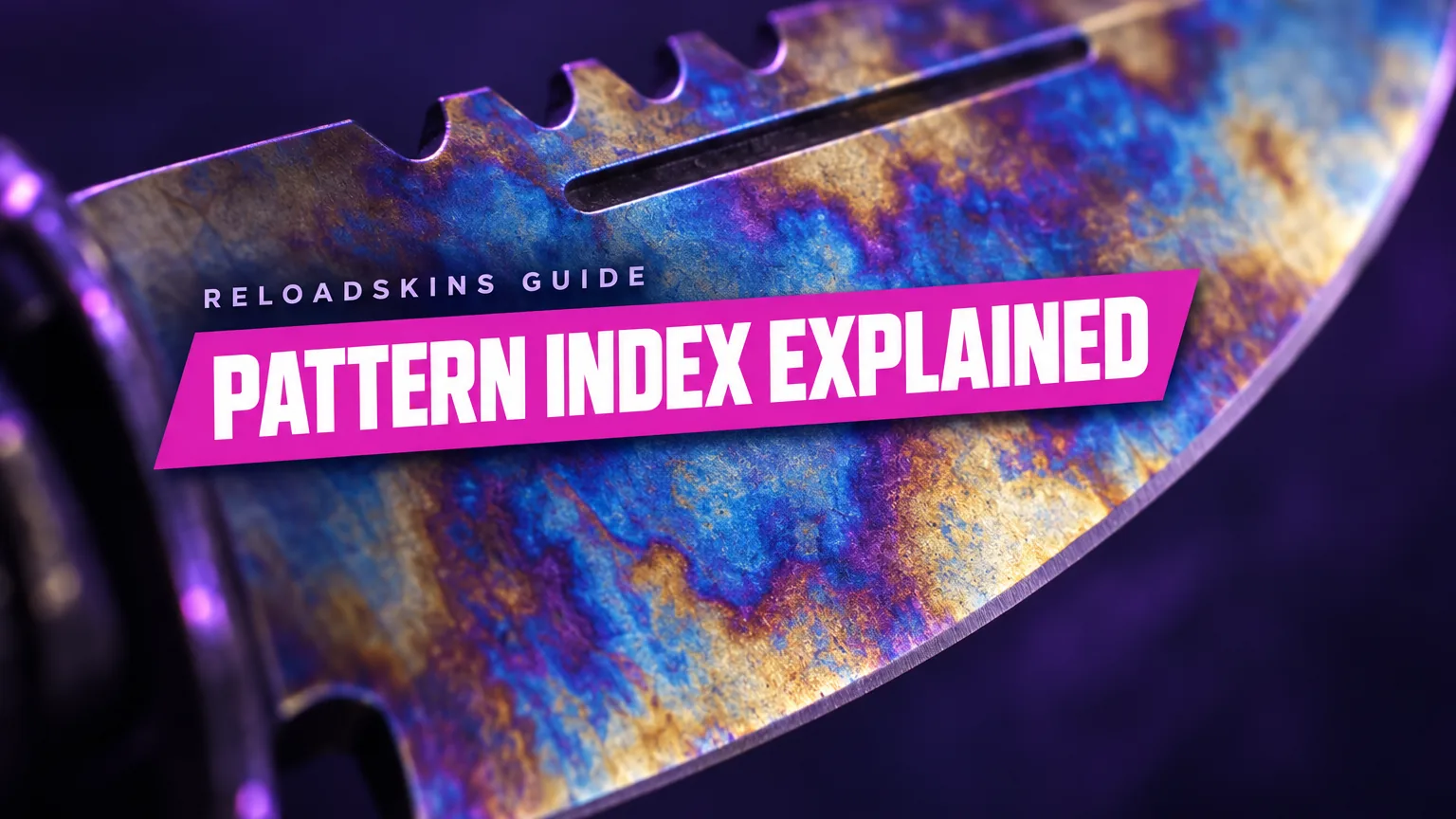
Have you ever seen two copies of the same skin, with the same exterior, that still look clearly different? The reason is usually the pattern index. In this guide you will learn what the pattern index is, how it differs from float, which finishes it affects most and why you should look at screenshots of the exact item before you buy.
What is a pattern index?
The pattern index, also called the paint seed, is a number from 0 to 999 that belongs to an individual skin. It decides how the finish is placed on the weapon model, so it controls which part of the design ends up where.
A simple way to picture it is to think of the finish as a large printed sheet and the weapon as an object you wrap in it. The design on the sheet stays the same, but depending on how the sheet is positioned, different sections of the design end up on different parts of the weapon. The pattern index is what sets that positioning.
That is why two copies of the same skin can look different. They share a name and a finish, but each copy has its own pattern index, so the design can sit on each one in its own way. It also means the name of a skin alone cannot tell you how a particular copy looks.
Pattern index vs float value
Pattern index and float are two separate properties, and it helps to keep them apart:
- Float value is a number from 0.00 to 1.00 that sets the exterior, from Factory New to Battle-Scarred. It controls how worn the finish looks.
- Pattern index is a number from 0 to 999 that controls how the finish is placed on the weapon. It decides where each part of the design appears.
Two skins with the same exterior can look different because of their patterns, and the same design placement can look cleaner or more worn depending on float. When you judge a skin, you are really looking at both properties at once.
There is one more useful distinction. Float is always summarised by an exterior name, so you get a rough idea of wear from the label. There is no equivalent label for pattern, which makes seeing the item for yourself even more important.
Finishes where pattern matters most
On many finishes, the difference between one pattern and another is subtle and easy to overlook. On some, it is dramatic. The pattern index matters most on finishes such as these:
- Case Hardened. The way the colours are distributed across the weapon changes from one pattern to the next, so two copies can look very different from each other.
- Fade. A colour gradient finish. The pattern decides how much of the full gradient is visible, which is described as the fade percentage.
- Doppler. A knife finish that comes in Phases 1 to 4 plus rare gem variants. Within a phase, the pattern still affects how the colours sit on the blade.
- Crimson Web. The pattern decides where the web lines fall on the weapon, which changes how balanced or striking the design looks.
- Marble Fade. The pattern decides how the colours are arranged, giving each copy a look of its own.
We cover two of these in more detail in our guides to Doppler phases and fade percentage.
Why some patterns stand out
On finishes where pattern matters, buyers often develop strong preferences. Some like a particular colour to dominate, some prefer a tidy or symmetrical layout, and others look for a placement that feels unusual. None of these preferences is right or wrong; they are simply matters of taste.
Because preferences differ, two copies of the same skin can be priced differently depending on their pattern. That does not mean you need to chase a particular pattern. The best reason to choose one copy over another is simply that you like the way it looks.
It also helps to think about which parts of the weapon you will actually see. On a weapon held in first-person view, some areas are more visible than others, so a pattern that looks great in one spot may matter more to you than how the rest of the weapon looks.
Why you should check screenshots of the exact item
This is the most practical point in this guide. A generic image of a skin shows you what the finish can look like, but it does not show you how the finish sits on the copy you are buying. For pattern-sensitive finishes, that difference can be significant.
Before you buy, it helps to:
- Look at screenshots of the exact item, ideally from more than one angle.
- Check the parts of the weapon you will see most, as well as the rest of it.
- Check the exterior alongside the pattern, since wear affects the overall look too.
- Ask if anything is unclear. If a listing does not show what you need to see, contact us before you buy.
Taking a moment to check is sensible because refunds do not cover a change of mind. If you are happy with how the exact item looks before you buy, you are far more likely to be happy with it afterwards.
Key takeaways
- The pattern index, or paint seed, is a number from 0 to 999 that decides how a finish is placed on the weapon model.
- Pattern and float are separate: pattern controls placement, while float controls wear.
- Pattern matters most on finishes like Case Hardened, Fade, Doppler, Crimson Web and Marble Fade.
- A skin’s name cannot tell you how its pattern looks, so always check screenshots of the exact item.
If pattern-sensitive finishes appeal to you, our knife collection is a great place to start exploring.