


News
Sticker Crafts 101: Placing, Scraping and Combining Stickers

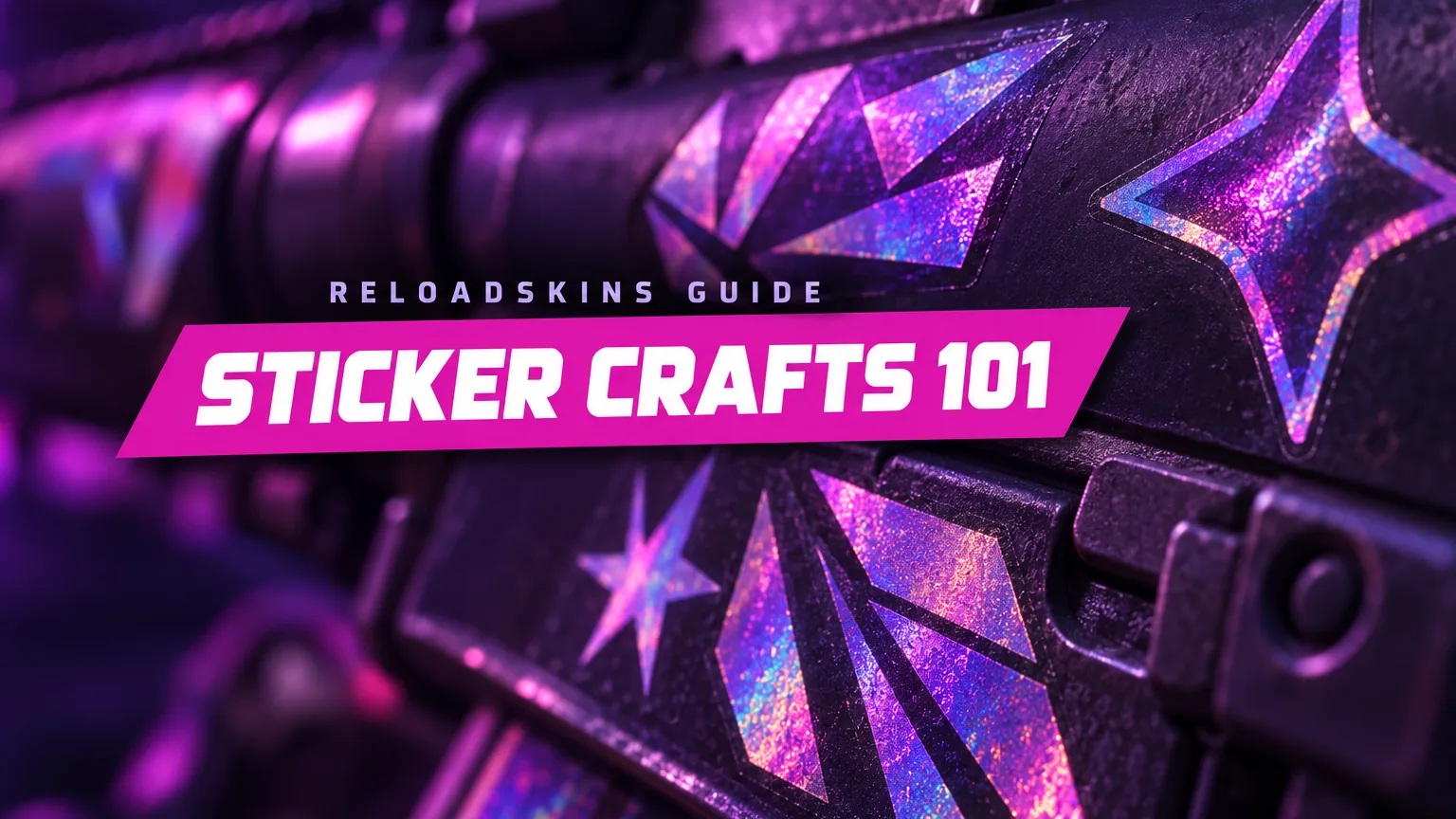
Stickers are one of the simplest ways to make a CS2 weapon feel like your own. In this guide you will learn what “sticker crafts” means, how placing and scraping work, and how to combine stickers into a look that suits the skin underneath. We will also cover what to check when you buy a weapon that already has stickers applied.
What sticker crafts actually are
In CS2, a sticker is a small decal that you apply to a weapon. Once applied, it sits on the weapon model and is visible whenever you hold or inspect that gun. “Sticker crafts” is the community term for deliberate sticker combinations and placements that build a particular look, rather than stickers stuck on without a plan.
A good craft treats the weapon as a canvas. The skin’s colours, the shape of the gun and the empty spaces on its body all influence which stickers work and where they should go. Some crafts are bold and busy; others use a single, carefully placed sticker to finish off an otherwise plain finish.
Crafting is entirely about taste. There is no score, no stat boost and no gameplay effect. A craft is successful if you enjoy looking at it every time you pull that weapon out.
Placing stickers: think before you apply
When you apply a sticker, you choose where it sits on the weapon model. That choice is effectively permanent. A sticker cannot be peeled off and returned to your inventory, so the only way to remove it later is to scrape it away. It makes sense to slow down before you confirm.
A few habits help:
- Check your own point of view. You spend most of your time looking at the weapon in first person, so think about which placements you will actually see during a round. Check the inspect view too, since that is how you will show the craft off.
- Respect the skin’s design. Avoid covering the most detailed part of the finish unless hiding it is the point of the craft.
- Use the weapon’s lines. Flat panels and areas such as the magazine or stock give stickers a natural frame. Aligning stickers with these edges makes a craft look intentional.
- Leave breathing room. Spacing matters as much as the stickers themselves. Crowding everything into one area rarely looks planned.
Scraping: wear by choice
Scraping lets you wear a sticker down on purpose. Each scrape makes the sticker look more worn, and scraping all the way removes it from the weapon completely. There is no way to undo a scrape, so go one step at a time and inspect the result before you continue.
Why would you deliberately wear down a sticker? There are a few good reasons:
- Matching the exterior. A pristine sticker can look out of place on a heavily worn skin. A light scrape helps it sit more naturally on a Field-Tested or Battle-Scarred finish.
- Adding texture. A partly worn sticker blends into the weapon and gives a craft a subtler, weathered feel that some people prefer to a bright, fresh look.
- Clearing space. If you change your mind about a placement, scraping the sticker fully is the only way to remove it and start again.
If you are unsure, stop early. You can always scrape a little more later, but you can never put the wear back.
Combining stickers into a look
The heart of a sticker craft is how the pieces work together. There is no single right answer, but most successful crafts follow one of a handful of approaches.
Colour matching
Pick stickers that echo the main colours of the skin. A purple-and-gold finish, for example, pairs well with stickers that share those tones. This is the safest starting point and works on almost any weapon.
Contrast
The opposite approach uses stickers that stand out against the skin, such as bright stickers on a dark, minimal finish. Contrast crafts are eye-catching but need restraint. One or two strong stickers usually beat a crowd of them.
Repetition
Using several copies of the same sticker in a neat row or cluster creates a strong, uniform look. It is one of the most recognisable craft styles and suits weapons with long, flat surfaces.
Theme
Some crafts tell a story by combining stickers that share a subject, mood or style. A theme can tie together stickers of different colours, as long as they feel like they belong to the same idea.
Choosing the right weapon for a craft
Not every gun is equally suited to stickers. Rifles such as the AK-47 are a natural fit because you see them so often in first person and they offer generous surfaces to work with. Pistols are smaller, so a craft there needs to be tighter and simpler.
The underlying skin matters as much as the weapon. Busy, highly detailed finishes can clash with stickers, while cleaner finishes give them room to shine. If you are building around a specific skin, browse AK-47 skins or the wider rifle range with your sticker idea in mind.
Buying a weapon that already has stickers
Applied stickers stay on the weapon when it changes hands, so a skin you buy may arrive with a craft already in place. Before you check out, make sure you know exactly what you are getting:
- Check which stickers are on the weapon and where they sit.
- Look at how worn each sticker is, as a previous owner may have scraped them.
- Remember that you can scrape an existing sticker, but you cannot remove one without scraping it away.
- Souvenir weapons carry a fixed set of tournament stickers from the match they are tied to, which is different from a personal craft.
Our guide on how to inspect a skin before you buy walks through these checks in more detail.
Key takeaways
- Sticker crafts are deliberate sticker combinations and placements that build a look.
- Placement is effectively permanent, so check both the first-person and inspect views before applying.
- Scraping wears a sticker down step by step and, taken all the way, removes it.
- Colour matching, contrast, repetition and theme are reliable starting points for any craft.
- When buying a stickered weapon, check each sticker and its wear before you pay.
Ready to start your own craft? Find a base skin you love in the ReloadSkins shop and build from there.